
Ask it anything about the sea. Every answer is sourced, and every source is one click away.
New in Descent
The latest from each current. Updated as we publish.
The Arctic’s Invisible Factory: How Melting Ice Edges Trigger Massive Cloud Surges
Scientists discovered a 50-fold surge in cloud-seeding particles at the Arctic ice edge, driven by a newly identified class of molecules called...
Antarctic Krill Fishery Reaches 620,000-Tonne Limit, Closing Season Months Ahead of Schedule
The Antarctic krill fishery has closed early for the second year in a row, raising concerns about fishing pressure near whale and...
Massive 463% Surge in Fish Biomass Recorded at Cabo Pulmo National Park
A 10-year study of Cabo Pulmo National Park reveals a 463% surge in fish biomass, proving that strictly enforced no-take zones can...
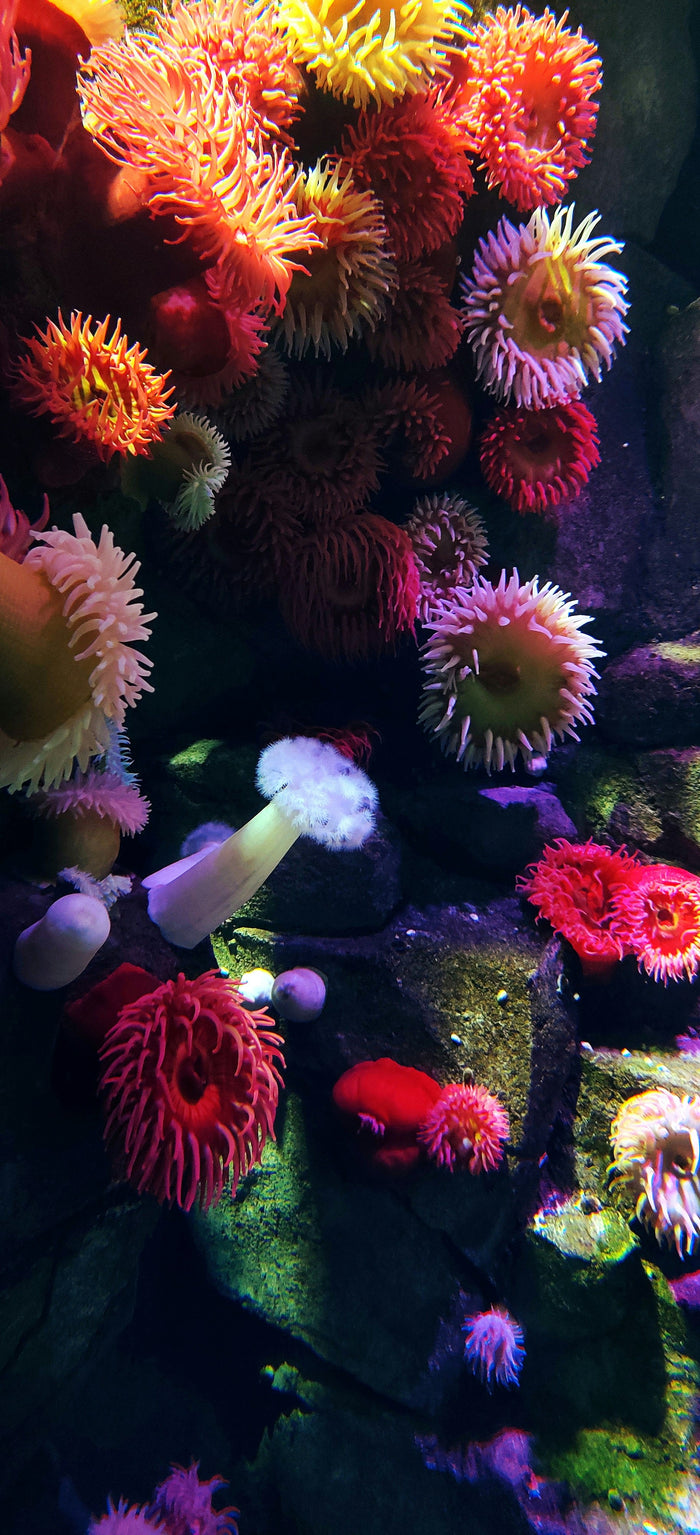
The Coral Reef Encyclopedia
Reefs cover a fraction of the seafloor and shelter about a quarter of everything that lives in the sea. The full page goes deep: reef biology, the species worth knowing, every major reef region, the global bleaching events, a glossary and a quiz. All sourced.
Each coral is a colony of tiny animals called polyps. They build limestone skeletons around themselves, and inside their tissue live microscopic algae, zooxanthellae, that photosynthesise and supply the coral with its colour and most of its food.
When water stays too warm, corals expel those algae and turn white. They are not dead yet, but without the algae they starve, and if the heat lasts they die. Mass bleaching now recurs on a global scale.
Yes, if the heat eases quickly enough and the reef is otherwise healthy. Recovery takes years, which is why the interval between bleaching events matters as much as their severity.

Where do they all go?
Humpbacks swim up to 8,000 kilometres between feeding and breeding grounds. Leatherback turtles cross entire ocean basins and come back to the same beach. Follow the real, tracked routes behind the animals on this site.
It is not the wildebeest. It is vertical, and it happens right through this depth every single night. Billions of small fish, squid and plankton rise hundreds of metres to feed in the dark surface water, then sink again before dawn. It is called diel vertical migration and it moves more animal mass than any other movement on the planet.
Food is richest near the surface, and so are predators that hunt by sight. Rising only in darkness lets these animals eat while staying hidden. It is a nightly trade between hunger and being eaten.
More than 80% of the ocean has never been mapped, observed or explored in any detail. We have better maps of Mars and the Moon than of our own seafloor.
Around a quarter, at modern high resolution, most of it achieved in the last decade through the international Seabed 2030 effort.
Around 240,000 marine species have been formally described, and most estimates put the true total far higher. The majority of ocean life has not been named yet.
The days the ocean gets noticed
Real awareness days and seasons coming up. Pick one to see why it exists and who runs it.
Saved on this device only. No account, no tracking.
Come back up for air.
See it. Learn it. Love it. Protect it.
↑ Return to the surfaceYou reached 4,000 m. The deepest point on Earth, Challenger Deep, is 10,935 m down. We are all still surface dwellers.